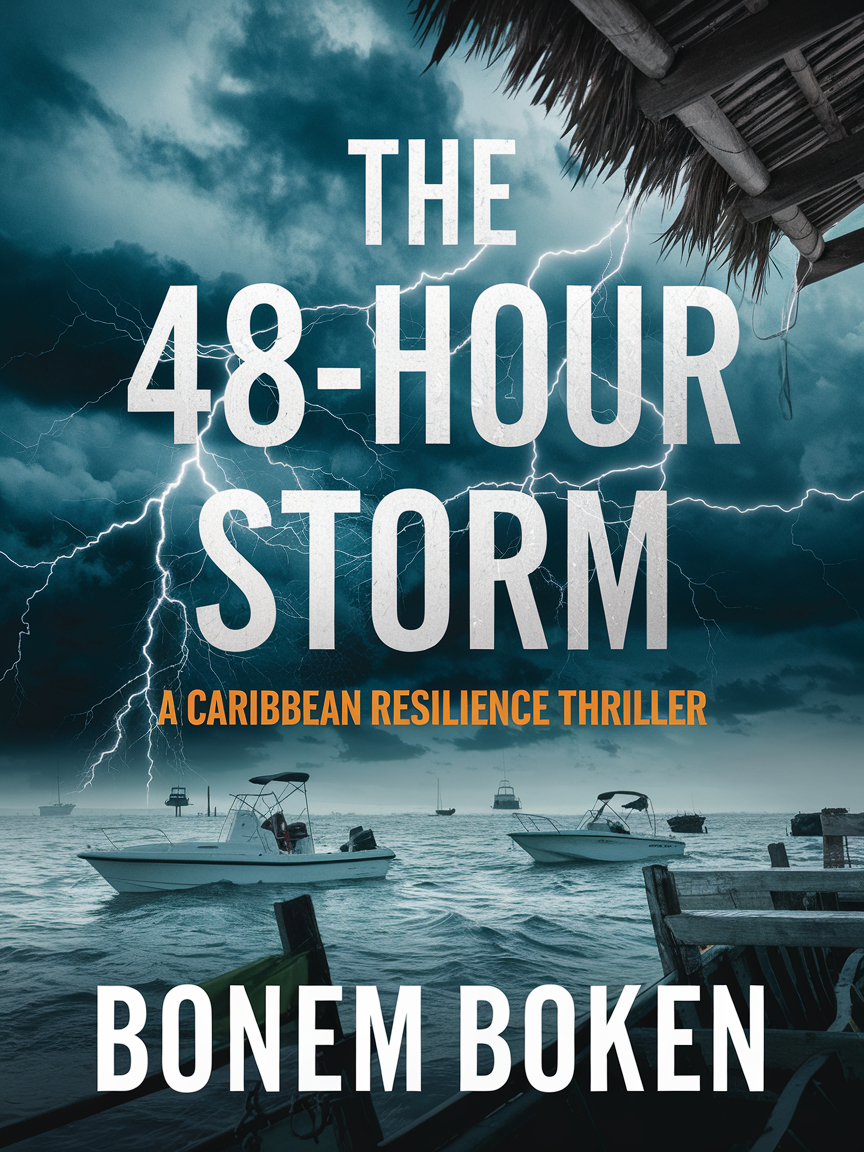
The 48-Hour Storm: A Caribbean Resilience Thriller
0 reviews
Chapters
3
Language
English - US
Genre
Published
March 2, 2026
Synopsis
Project Summary: The 48-Hour Storm 1. Overview & Mission Title: The 48-Hour Storm Genre: Climate Thriller Novella (Fast Read) Setting: Morne Bay, a fictionalized coastal village in the Lesser Antilles. Mission: To humanize climate disaster statistics through a gripping narrative that validates Caribbean resilience, emphasizing that survival is not a solitary act but a communal triumph. Format: Designed as a "Fast Read" (approx. 20,000 words) to be consumed in one or two sittings. It serves as the emotional counterpart to the non-fiction companion, The Bamboo Mindset. 2. Plot Summary Premise: A disgraced meteorologist returns home with data predicting a catastrophic hurricane. He has 48 hours to convince a skeptical village to evacuate. As infrastructure fails, he discovers survival isn't about perfect data—it's about sacrificing everything for the community. Act 1: The Warning (Hours 48–24) Elias Baptiste detects an abnormal pressure drop contradicting the national forecast. Formal warning systems (NEMA SMS, sirens) fail due to maintenance and congestion. Elias must warn the village personally but faces skepticism rooted in past false alarms. He allies with Mama G, the village elder. When her traditional ecological knowledge validates his data, the community mobilizes. Act 2: The Impact (Hours 24–0) The single escape bridge floods, cutting the village off from external aid. Power fails, rendering Elias's technology useless. The Community Center shelter fills beyond capacity. Resources dwindle, and Shani, the teacher managing the shelter, faces impossible triage decisions. In the climax, Elias chooses between saving his ancestral home or saving trapped holdouts. He chooses the people. His home is destroyed, but the neighbors survive thanks to Marcus's boat rescue. Act 3: The Aftermath (Hours 0–48 Post-Storm) The storm passes. The village is damaged; Elias's home and Marcus's boat are lost. There is no magical restoration. Redemption is found not in property saved, but in lives preserved. Elias joins the community in cleanup efforts, no longer an "expert from abroad" but a neighbor. The story ends with the community self-reliant, awaiting aid but not dependent on it. 3. Character Ensemble Elias Baptiste (Meteorologist): Arc: Outsider → Member. Learns humility and service over status. Symbol: The Head (Science). Expertise must serve the community. Mama G (Village Elder): Arc: Skeptic → Ally. Validates science with tradition. Symbol: The Heart (Tradition). Indigenous wisdom and moral authority. Marcus Joseph (Fisherman): Arc: Blocker → Rescuer. Loses livelihood but finds purpose in action. Symbol: The Hands (Labor). Economic anxiety turned into service. Shani Charles (Teacher): Arc: Organizer → Leader. Manages care and triage under pressure. Symbol: The Shield (Care). Social infrastructure and future protection. 4. Core Themes Collective Resilience: Survival depends on social infrastructure (neighbors) as much as physical infrastructure. Resilience is bending together. Hybrid Knowledge: Modern technology and Indigenous knowledge are partners. True resilience requires respecting both. People Over Property: "Home" is the people who survive, not the structure. Holding onto property at the cost of life is a failure. Agency vs. Victimhood: Caribbean people are active agents of their own survival, not passive victims waiting for rescue. The Reality of Loss: Resilience does not mean escaping damage; it means enduring damage and rebuilding. Honesty about loss is stronger than false optimism. 5. Setting & Cultural Framework Location: Morne Bay. A steep amphitheater of green hills descending into a crescent-shaped bay. Key Zones: The Zinc Ridge (Vulnerable coastal town), The Weather Station (Isolated hillside), The Community Center (Concrete safe zone), The Blockage (Flood-prone bridge). Sensory Details: Roar of rain on zinc roofs, smell of ozone and wet earth, sticky humidity, eerie silence of the storm's eye. Social Hierarchy: Respect is determined by history and trust (Elders) rather than wealth. Elias must earn Mama G's endorsement. The "Lime" Network: Informal gathering spots serve as the primary communication grid when technology fails. Community Collectivism: Open door policies and resource pooling. Hoarding is socially punished; sharing is mandatory. Governance: Tension between Centralized Authority (NEMA/Police - slow, brittle) and Local Agency (Village Council - fast, flexible). The story validates Local Agency.
More Books by the Author
Create Your Own Book
Inspired by what you've read? Turn your ideas into reality with FastRead's AI-powered book creation tool.
Start Writing Now