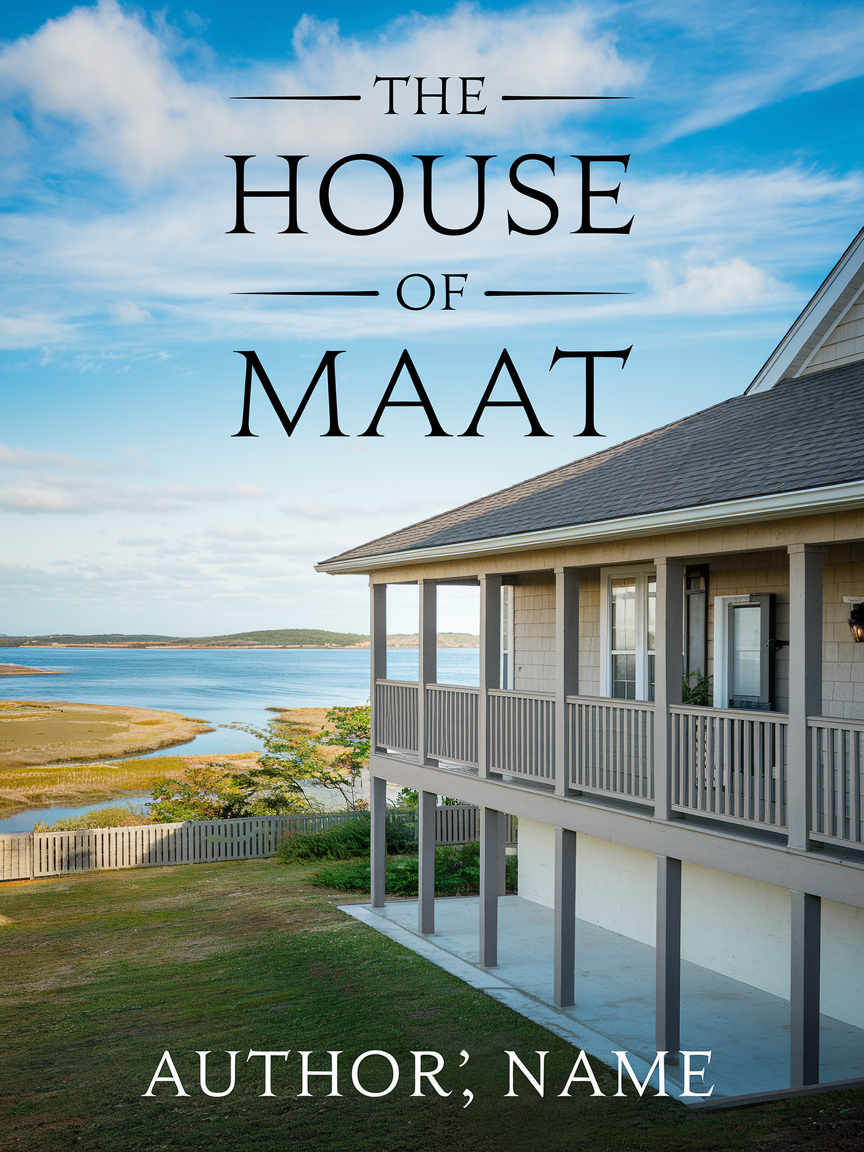
The House of Maat
0 reviews
Chapters
6
Language
English - US
Genre
Published
April 23, 2026
Synopsis
COMPREHENSIVE SUMMARY: THE HOUSE OF MAAT PLOT OVERVIEW When siblings Marcus and Elena Vance inherit their family’s fifty-year-old home on a scenic bluff overlooking Portsmouth, Dominica, they expect clarity. Instead, the will delivers an impossible mandate: “Upper domain to the daughter, lower domain to the son.” The house is a single-story structure with a finished basement, making the clause architecturally absurd and emotionally fraught. Marcus, a pragmatic father of seven, is squeezed into a damp, low-light basement while managing daily chaos. Elena, raising one child, floats in an echoing, underutilized main floor, guarding memories but feeling increasingly isolated. Their initial attempts to split or buy out each other’s share fracture their bond, exposing childhood resentments, unspoken grief, and clashing definitions of fairness. A severe Caribbean storm floods the basement, damages the roof, and cuts power, forcing the fractured family to shelter together in one room. Stripped of logistics and pride, they confront the human cost of rigid division. Guided by their aunt Cora’s ancestral journals, they encounter Maat—an ancient philosophy of truth, balance, and reciprocal harmony. Abandoning transactional thinking, they partner with architect Julian Thorne to co-create a redevelopment that honors heritage while meeting modern generational needs. Through iterative design workshops, preservation board negotiations, financial restructuring, and hard-won vulnerability, they transform the obsolete structure into a majestic, multi-generational estate. The story culminates in a cornerstone ceremony where past and present merge, and a five-year epilogue reveals a home thriving as a living legacy—proof that true inheritance isn’t divided, it’s expanded. CORE THEMES Balance Over Division: Maat reframes “fairness” from equal splitting to intentional adjustment based on need, context, and care. Rigidity fractures; flexibility sustains. Legacy as Living Practice: Inheritance is not a static asset to be preserved in amber, but a dynamic responsibility to be adapted, shared, and actively stewarded across generations. Space as Emotional Architecture: Floor plans, load-bearing walls, and sightlines mirror relational health. Cramped, isolated spaces reflect fractured trust; open, flowing layouts symbolize restored harmony and psychological safety. Healing Through Iteration: Progress is non-linear. Failed blueprints, rejected plans, budget setbacks, and difficult conversations are not defeats—they are necessary drafts in the architecture of authentic resolution. Cultural Stewardship & Adaptive Wisdom: Caribbean communal land ethics, elder reverence, hurricane-resilient building traditions, and post-colonial inheritance tensions ground the narrative, showing how innovation must honor inherited environmental and cultural intelligence. KEY POINTS & NARRATIVE DRIVERS Character-Centric Ensemble: Five interwoven arcs drive the story: Marcus’s shift from control to collaboration, Elena’s evolution from preservation to adaptation, Julian’s pivot from rigid modernism to human-centered design, the children’s journey from isolation to bonded co-creation, and Cora’s graceful transmission of ancestral wisdom. Structural Metaphor: Every external obstacle (flawed will, storm damage, zoning rejection, supply delays) mirrors internal fragmentation. Physical redevelopment tracks emotional reconciliation beat-for-beat. Philosophical Framework: Maat operates as both thematic spine and practical decision-making tool, offering readers a replicable mindset for navigating shared property, family conflict, and multi-generational living. Cultural Authenticity: Rooted in Dominican/Caribbean realities: communal land ethos, neighborhood social capital, vernacular architecture, legal vs. customary inheritance tensions, and spiritual syncretism that values balance, reciprocity, and “walking good.” Emotional & Market Appeal: Combines literary family drama with architectural metaphor and place-specific depth. Delivers catharsis, hope, and actionable wisdom. Designed for book clubs, contemporary fiction readers, heritage preservation enthusiasts, and audiences seeking stories about home, legacy, and the quiet courage of rebuilding together. AUTHORIAL INTENT The House of Maat is crafted as a contemporary parable for modern families navigating inheritance, spatial mismatch, and relational fracture. It demonstrates that legacy isn’t secured by carving up the past, but by adapting it to serve the living. Through tightly paced emotional beats, culturally grounded realism, and a triumphant vision of co-creation, the novel leaves readers with a lasting conviction: balance is not stillness. It is the constant, courageous adjustment of weight so nothing—and no one—breaks.
More Books by the Author
Create Your Own Book
Inspired by what you've read? Turn your ideas into reality with FastRead's AI-powered book creation tool.
Start Writing Now