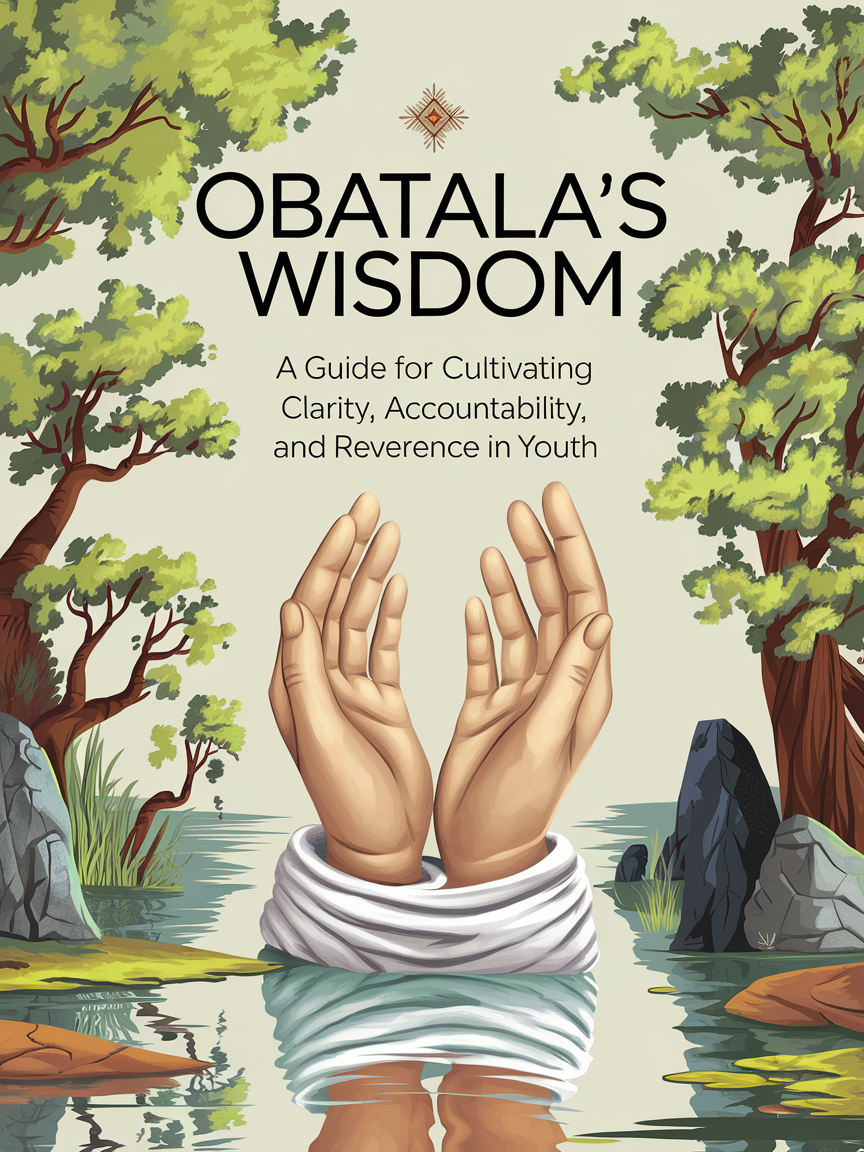
Obatala's Wisdom: A Guide for Cultivating Clarity, Accountability, and Reverence in Youth
0 reviews
Chapters
6
Language
English - US
Genre
Published
April 27, 2026
Synopsis
Overview & Structural Arc ("Plot") White Cloth, Wise Hands is a non-fiction cultural-educational guide structured as a progressive pedagogical journey. Rather than following a fictional narrative, the book’s “plot” traces the reader’s transformation from cultural curiosity to confident, ethical teaching. It opens with foundational myth and historical context, moves through age-appropriate storytelling frameworks and hands-on family activities, confronts the complexities of diaspora adaptation and cultural boundaries, and concludes with ready-to-implement curriculum templates and legacy-building strategies. Each chapter builds on the last, guiding educators and caregivers from understanding Obatala’s origins to facilitating meaningful, respectful intergenerational learning. Core Themes Ancestral Continuity & Cultural Memory: How myth and philosophy sustain identity across displacement and diaspora. Ethical Creation & Accountability: Obatala’s story as a model for owning mistakes, correcting course, and protecting the vulnerable. Purity of Intention: Clarity, restraint, and mindful action as foundations for personal and community life. Respectful Transmission: The careful boundary between public cultural education and closed priestly/ritual practice. Intergenerational Stewardship: Teaching as an act of legacy, not dogma; prioritizing dialogue, reflection, and lived values over prescription. Key Points & Practical Takeaways Obatala is framed as a cultural-philosophical archetype of wisdom, justice, and mindful creation, not a doctrinal or initiatory figure. Content is tiered for ages 6–12 (foundational storytelling, sensory activities, moral fables) and 13–18 (critical discussion, historical context, ethical leadership). All activities are explicitly non-ritual: white food preparation, proverb exploration, textile/craft metaphors, oral history mapping, and structured family dialogues. Clear guidelines distinguish appreciation from appropriation, with protocols for consulting initiated elders, citing sources, and honoring Ile-Ife origins alongside diaspora adaptations (Lucumí, Candomblé, Santería). Ready-to-use lesson plans, discussion prompts, pronunciation guides, and assessment rubrics enable immediate classroom, homeschool, or community workshop use. Emphasis on process over perfection: imperfection, neurodiversity, and disability are honored through Obatala’s mythic vow of protection and ethical accountability. Designed to integrate seamlessly with Horizon Bridge Academy’s cultural literacy framework, supporting facilitator training, heritage programming, and community resilience initiatives. Intended Impact The book equips adults to share Obatala’s wisdom with cultural integrity, pedagogical clarity, and ethical humility. It transforms ancestral narrative into actionable character education, fosters intergenerational dialogue, and provides a scalable, respectful model for teaching African and diasporic cosmologies in modern learning spaces.
More Books by the Author
Create Your Own Book
Inspired by what you've read? Turn your ideas into reality with FastRead's AI-powered book creation tool.
Start Writing Now