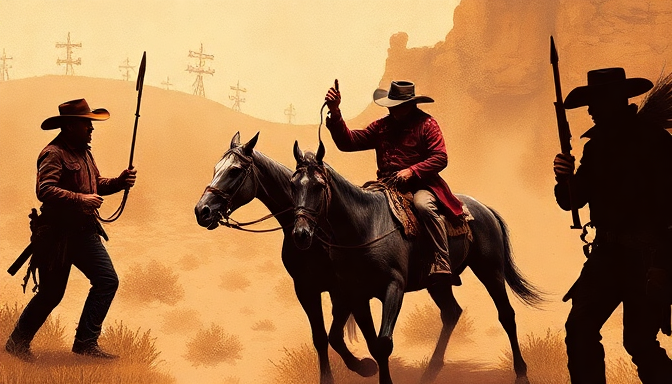
Westward Expansion and the Acquisition of New Territories
The relentless westward expansion of the United States in the 19th century was fueled by the ideology of Manifest Destiny, the belief that American settlers were destined to expand across the continent. This expansion wasn't merely a peaceful migration; it involved the systematic acquisition of new territories through purchase, treaty, and often, outright military conquest. These actions were justified by the myth of the Wild West, which portrayed the land as sparsely populated and ripe for the taking.
Key acquisitions like the Louisiana Purchase in 1803, the annexation of Texas in 1845, and the Treaty of Guadalupe Hidalgo in 1848, which ceded vast territories from Mexico, dramatically reshaped the American map. These land grabs weren't just about geography; they were about resources, power, and the subjugation of indigenous populations. The narrative of the Wild West conveniently glossed over the violence and displacement inherent in this process, presenting it instead as a heroic tale of taming the wilderness.