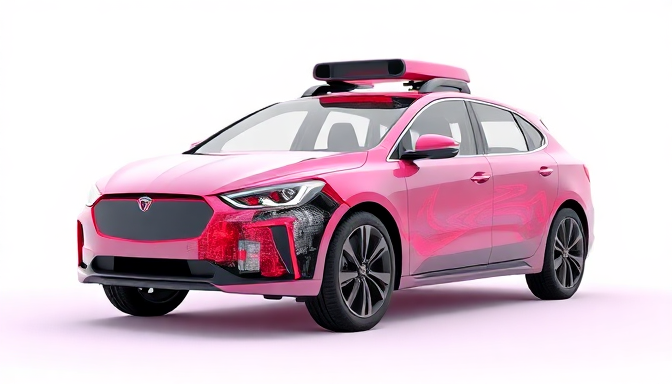
Fundamentals of Autonomous Driving Simulation
Autonomous driving, at its core, relies on complex decision-making systems that must operate flawlessly in an infinite array of real-world scenarios. Testing these systems solely on physical roads is prohibitively expensive, time-consuming, and carries inherent safety risks. This is precisely where autonomous driving simulation becomes not just beneficial, but an absolutely indispensable tool. It provides a controlled, repeatable, and safe environment to rigorously test and validate every facet of an autonomous vehicle's (AV) perception, planning, and control modules.
At its essence, an autonomous driving simulation creates a digital replica of the real world, complete with virtual roads, traffic, pedestrians, and environmental conditions. Within this virtual space, a digital twin of the AV can operate, interacting with the simulated environment and other virtual entities. This allows engineers to assess how the vehicle's algorithms respond to various situations, from routine commutes to rare, critical edge cases that are difficult to reproduce physically.