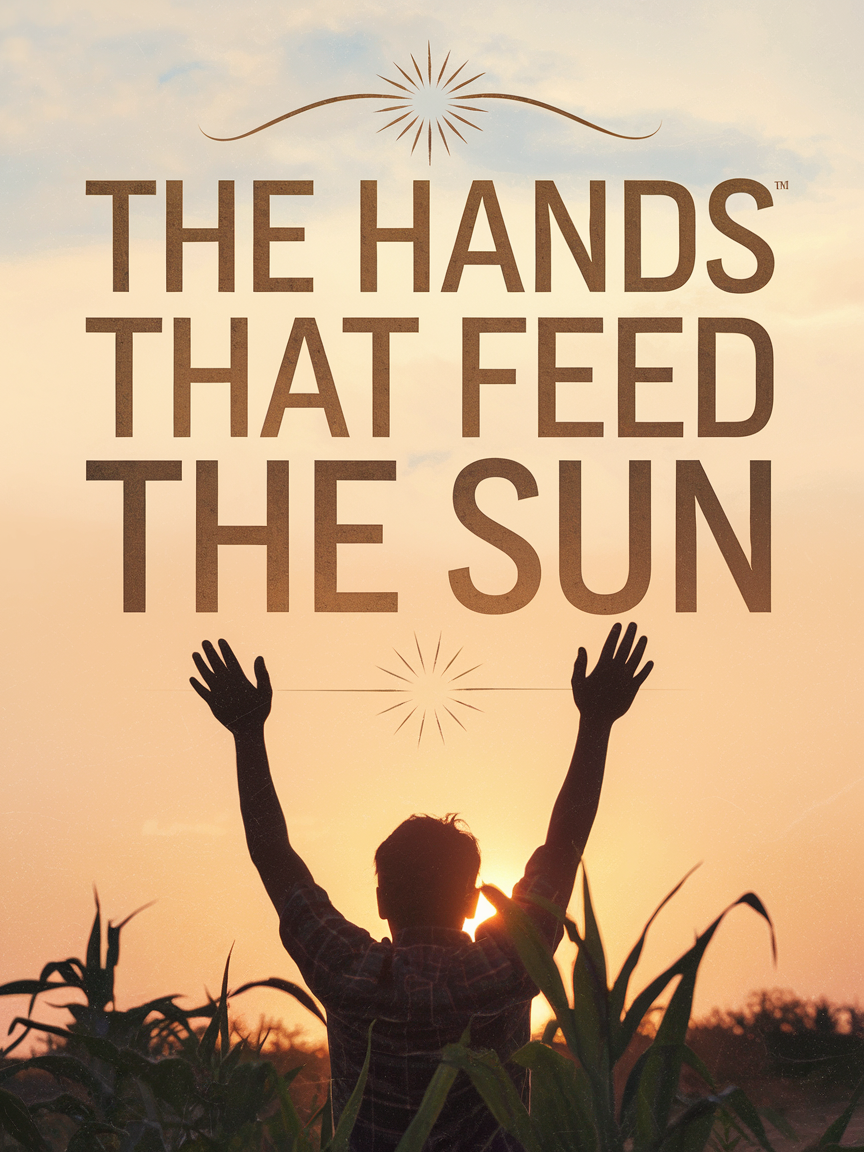
The Hands That Feed the Sun
0 reviews
Chapters
12
Language
English - US
Genre
Published
January 31, 2026
Synopsis
The Hands That Feed the Sun is a lyrical yet practical guide disguised as a sweeping narrative. It follows the journey of a community rediscovering its worth. It begins with the stark reality of the 'Empty Plate,' moves through the technical evolution of understanding consumer desires, and culminates in a roadmap of 20 essential virtues. It is a book designed to be read aloud under a porch light—a manual for survival that reads like a classic of world literature, ensuring that the torch of agriculture burns bright enough for the next generation to want to hold it. To help you move from prompts to a finished manuscript, I can begin drafting the specific content for the "20 Commandments" or the opening narrative. To help you move from prompts to a finished manuscript, I can begin drafting the specific content for the "20 Commandments" or the opening narrative. 1. The Narrative Foundation & The Empty Table Prompt: "Write the opening chapter of a book titled The Hands That Feed the Sun. Use the style of magical realism to describe a world where, for one day, every farmer stops. Describe the silence of the markets and the fading of color from the city’s dinner tables. Establish the central thesis: the farmer is the heartbeat of civilization. Use simple, rhythmic language accessible to a rural laborer, emphasizing that without the plow, the king and the merchant both starve." 2. The Market’s Whisper (The Transformation) Prompt: "Draft a story-driven chapter where an aging farmer, Santiago, learns to listen to the 'voice of the market.' Narrate his realization that his sweat is wasted if he grows what the earth wants but what the people do not need. Explain through his eyes that quality is not a gift, but a promise kept to a stranger (the consumer). The tone should be one of empowerment—showing that by understanding the market, the farmer masters his own destiny rather than being a slave to the soil." 3. The Virtues of the Producer (The 20 Commandments) Prompt: "Create a structured section of the book that outlines 20 essential characteristics and actions for the modern producer. The list must begin with: 1) Mastery of Market Intelligence, 2) Deep Knowledge of the Consumer, 3) The Pursuit of Desired Quality. Frame these not as chores, but as the 'Tools of the Problem Solver.' For each point, provide a short, anecdotal example of how this trait saves a farm from ruin. Ensure the language is grounded, using metaphors of seeds, seasons, and legacy." 4. The Eternal Root (Legacy and the New Generation) Prompt: "Write a poignant concluding chapter focused on the 'Passing of the Hat.' Narrate a dialogue between a father and his daughter, where the father reveals that farming is not a cycle of poverty, but a sophisticated legacy of innovation and problem-solving. Make the profession of farming seem as noble as medicine and as exciting as discovery, designed specifically to inspire the youth to see the farm as an empire of potential rather than a burden of the past."In an era defined by evolving market demands and technological advancements, 'The Cultivator's Edge' offers an inspirational roadmap for small to mid-sized producers, agricultural students, and the families who form the backbone of rural communities. This book moves beyond traditional views of farming, presenting agriculture as a sophisticated entrepreneurial venture. It is designed to bridge the historical gap between age-old farming practices and the dynamic needs of today's global marketplace, empowering cultivators to see themselves not just as tillers of the soil, but as astute business leaders. Carlos Alberto Itza draws upon his extensive global experience to demystify the transition from subsistence farming to thriving agricultural enterprises. The book delves into practical strategies for enhancing value chains, implementing climate-smart agricultural techniques, and building resilient producer organizations and cooperatives. By dignifying the farmer as a modern entrepreneur, 'The Cultivator's Edge' provides the insights and inspiration necessary to navigate market complexities, secure profitability, and ensure a prosperous future for agricultural communities worldwide.
More Books by the Author

Create Your Own Book
Inspired by what you've read? Turn your ideas into reality with FastRead's AI-powered book creation tool.
Start Writing Now