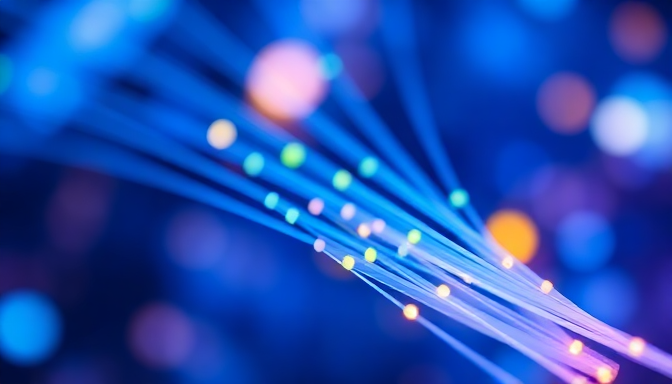
Overview of Fiber Optic Technology
Fiber optic technology is the backbone of modern communication, allowing us to send information at incredible speeds using light. Think of it like sending messages through tiny glass or plastic threads, where pulses of light carry data across vast distances. This method is far superior to older technologies like copper wires, which can only handle so much information and are prone to interference. The ability of fiber optics to transmit data quickly and reliably has revolutionized everything from internet access and telecommunications to medical imaging and scientific research.
The fundamental principle behind fiber optics involves guiding light signals along a thin strand of glass or plastic. This is achieved through a process called total internal reflection, where the light bounces off the inner walls of the fiber without escaping. The fiber itself is typically made of a core material surrounded by a cladding layer with a slightly lower refractive index. This difference in refractive index is what causes the light to continuously reflect inwards, ensuring the signal travels the entire length of the fiber with minimal loss.