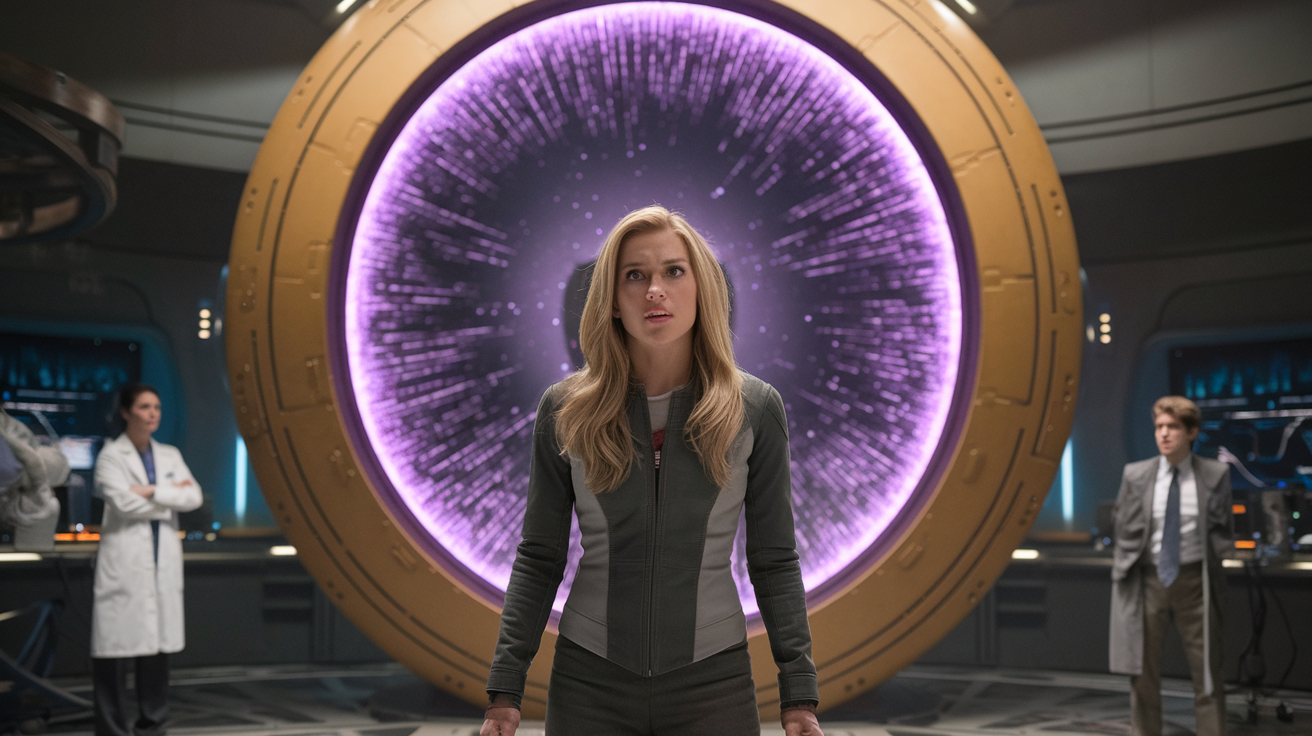
Dr. Aris Thorne, a man whose ambition had long outpaced the cautious pace of conventional science, stood before the shimmering maw of the T-Matrix. Years of relentless theoretical physics, countless failed prototypes, and the quiet erosion of his personal life culminated in this singular, breathtaking moment. The air in the sterile, subterranean laboratory thrummed with a suppressed energy, a resonance that vibrated deep within his bones, a symphony of anticipation and the faint, unsettling whisper of doubt. Every circuit glowed with a precise, almost sentient light, awaiting his final command, the ultimate test of his groundbreaking achievement. This was not merely transport; this was the conquest of space itself, the ultimate liberation from physical constraints. His gaze, usually sharp and analytical, held a rare, almost childlike wonder, mingled with the heavy weight of his singular focus. He was about to redefine humanity's place in the cosmos.
With a deep, measured breath, Thorne’s fingers danced across the holographic console, initiating the final sequence. A low, guttural hum vibrated through the reinforced floor, escalating into a high-pitched whine that threatened to shatter the very air around them. The central chamber of the T-Matrix, a colossal ring of interwoven quantum conduits, pulsed with an incandescent, cerulean light, growing in intensity until it became an unbearable supernova contained within the lab. Energy readings surged, numbers on his primary display spiraling into stratospheric echelons, far beyond anything ever recorded in human history. His heart hammered against his ribs, a drumbeat of triumph, as the complex algorithms resolved, compressing and dematerializing the inert test subject — a simple, lead-weighted block — into a cascade of pure energy. The moment of truth had arrived.