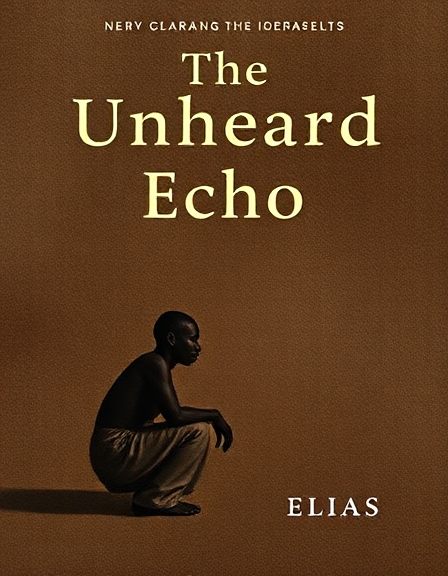
The Unheard Echo
0 reviews
Chapters
6
Language
English - US
Genre
Published
July 4, 2026
Synopsis
In the final years before a nation names itself free, Elias a Nigerian slave is bound to the household of one of its architects: an aging, revered statesman whose body is failing even as his ideas help shape a new republic. Elias is not a servant in the ornamental sense, nor a confidant, nor a man allowed the dignity of belonging. He is trusted because he is careful, witty, observant, and useful — the kind of enslaved attendant who can move quietly through a room without disturbing the performance of power. His task is ordinary on the surface: carry messages, fetch medicines, steady his master into a wheeled chair, polish the silver, and stand in corners where men assume no one is listening. But Elias has the curse and gift of proximity. He hears the unguarded fragments: merchants calculating profit, lawmakers speaking of liberty with one mouth and property with the other, reverent men debating whether God should be named aloud or only implied through the language of providence. He begins to understand that the new nation is being assembled not only by conviction, but by compromise, fear, and the protection of wealth. As Elias pieces the conversations together, he sees the contradiction sharpen into something almost unbearable. The men in the room speak of rights as if they are universal, yet the freedom they imagine stops where race, class, and labor begin to threaten their own comfort. He is close enough to hear history being written, but never close enough to be considered human within it. Back among the enslaved quarters, Elias becomes a quiet keeper of truth. He shares what he can with those who trust him: a sentence overheard in a doorway, a name, a date, a phrase about the people that reveals more than its speakers intend. His words spread carefully through the invisible network of the plantation, joining the grievances of enslaved people with the precarious hopes of White indentured servants who begin to realize they, too, are trapped within a hierarchy designed to divide the vulnerable from one another. Together they form a dangerous plan. If the men in Philadelphia will not admit what they are building, then the truth must be carried beyond the colony. They decide to steal the Declaration and send it to England, where the empire that still watches from across the sea might be forced to see the contradiction in full: liberty proclaimed, bondage preserved. But in every hidden movement, there is a weakness. Someone within Elias’s circle — a frightened ally, a compromised helper, or a man pressed by threat and the promise of mercy — betrays them. The warning comes too late. The trap closes in a rush of boots, lantern light, and accusation. Elias and the others are captured, their bodies punished, their names reduced to the language of property and crime. Yet the novel does not end with arrest. It ends with inheritance. Elias learns that even when men with power silence a body, they cannot fully erase a memory. He carries forward the beginning of an underground network of Black thinkers, laborers, and sympathetic allies who keep passing knowledge through song, prayer, rumor, scripture, and coded instruction. His son and two daughters inherit the work in secret, each one trained to listen, remember, and survive. The rebellion becomes quieter, deeper, and harder to destroy. The final movement of the book is not a battlefield triumph but a lineage of resistance. The new republic rises above them, polished and proud, while beneath it a hidden architecture of witness, defiance, and remembrance takes shape. Elias’s life becomes the proof that the people history tries hardest to overlook are often the ones who plant its most lasting seeds.
Create Your Own Book
Inspired by what you've read? Turn your ideas into reality with FastRead's AI-powered book creation tool.
Start Writing Now