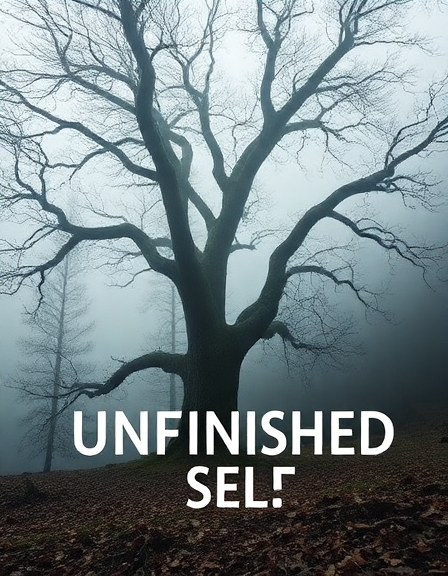
The Unfinished Self: Echoes in the Hollow
0 reviews
Chapters
6
Language
English - US
Genre
Published
March 5, 2026
Synopsis
Detective Nora Graves is haunted, not just by the specter of her deceased partner, but by the gaping wound left by her daughter's absence. In the remote, mist-shrouded town of Blackwood Creek, a supernatural crime unfolds, a case that resonates with Nora's own unresolved grief. Her unique sensitivity to incomplete stories, a gift forged in the crucible of personal tragedy, makes her the only one who can unravel the town's dark secrets. But as Nora delves deeper into the spectral mystery, she finds herself confronting not only the lingering spirits of the victims but also the ghost of the woman she once was, before loss irrevocably reshaped her Setting: Havenwood & The Mountain The Oak Tree Two miles up a trail that does not appear on any tourist map. Old-growth white oak, enormous, older than the town. The locals have stories about it — benign ones, mostly. Wishes. Lovers' initials. The particular feeling of standing under it in late October. What the tree is: a monument to unfinished business. It does not bind souls because it is malevolent. It binds them because it was made to. It is a tool that was given a purpose by grief and has been fulfilling that purpose ever since. What the tree sounds like when Nora finally reaches it and is quiet enough to hear: people breathing. Slow and waiting. A dozen of them. Nora's dark humor provides a crucial tonal balance — grounding the story, preventing melodrama. Her sarcastic observations about a haunted tree or a soulless teenager are her way of surviving the unbearable. She says things at crime scenes that other investigators mistake for callousness. They are not. They are how she stays upright. Thematic Architecture Primary Theme: The Cost of Witnessing Nora has made a life of witness. She believes she can stand at the edge of someone's wound and illuminate it without entering it. The novel dismantles this — not cruelly, the way a tide dismantles a sandcastle. Gradually. Completely. By the end, Nora understands that to truly witness someone's pain you have to let it resonate in your own body. That means you are changed. You cannot emerge the same. Secondary Theme: The Heard and the Unheard Every soul bound in the oak shares a common thread: their story was dismissed. Their pain was adjudicated by someone else as insufficient, inconvenient, or imaginary. The binding is not supernatural punishment — it is the logical end of prolonged erasure. The novel argues — without arguing, because the best literary fiction never argues — that the minimum viable form of closure is acknowledgment. Not resolution. Not justice, necessarily. Simply: someone bearing true witness to what happened and saying so out loud. That the thing occurred. That it mattered. That the person who carried it was real. Tertiary Theme: The Unfixable Self Nora's deepest belief — the one she has never examined — is that she is waiting to become whole again. That the correct sequence of closures will eventually fill the hollow where Ava was, where her partner was, where her childhood's explanations never arrived. The novel's most important gift to her: proof that this belief is wrong. Not as punishment. As liberation. You cannot retrieve the person you were before trauma. You can only grieve them and learn to live as who you've become. Some stories don't end. Some bindings don't break. And learning to live inside that — present, moving, feeling — is not failure. It is the only real freedom the novel offers. Nora's Dark Humor as Thematic Counterweight Her wit is not comic relief. It is load-bearing. It is how a person survives the unbearable while still walking toward it. Every cutting joke she makes at a crime scene is the sound of someone refusing to go numb. The novel should honor this — not by softening it, but by letting the moments when the humor drops be devastating precisely because of how rarely they occur.
Create Your Own Book
Inspired by what you've read? Turn your ideas into reality with FastRead's AI-powered book creation tool.
Start Writing Now