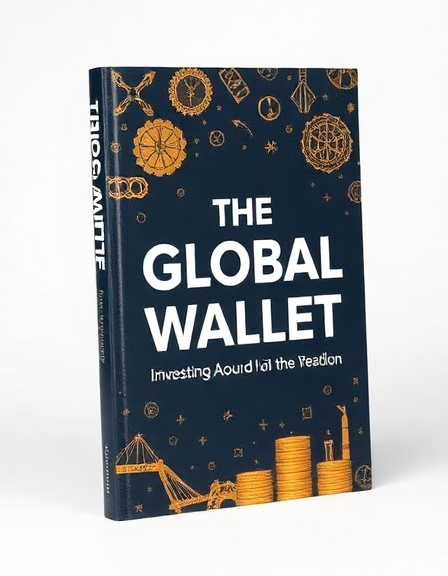
The Global Wallet
0 reviews
Chapters
6
Language
English - US
Genre
Published
October 7, 2026
Synopsis
.Chapter 17 — Investing Around the World The way people invest is shaped by more than mathematics. Culture, history, trust, family expectations, religion, government policy, and access to financial markets all influence where people put their money. 1. India 🇮🇳 — Gold, Property & Growing Equity Culture In India, traditional wealth has often been associated with gold and real estate. Families may buy gold for weddings and long-term security, while property is commonly viewed as a tangible asset. At the same time, India's younger generation has increasingly embraced mutual funds, stocks, ETFs and systematic investing. A typical mindset might be: > “First protect the money, then grow it.” The interesting shift is from physical wealth → financial wealth. --- 2. United States 🇺🇸 — Markets & Retirement Investing The United States has a deeply developed investment-market culture. Many Americans invest through: - Stocks - Mutual funds - ETFs - Retirement accounts - Real estate - Business ownership Employer-sponsored retirement plans also make investing part of many people's long-term financial planning. The mindset is often: Income → invest → compound → retirement wealth. This makes time an important part of American investing culture. --- 3. Japan 🇯🇵 — Safety First Japanese households have historically shown a strong preference for cash and deposits, although investment participation has been changing. Japan's long period of low interest rates also influenced household behavior. A useful lesson is: People don't automatically invest just because investing exists. They need to believe that taking investment risk is worthwhile. --- 4. China 🇨🇳 — Property, Business & Investing Chinese households have historically placed substantial importance on property, while entrepreneurship and business ownership have also played an important role in wealth creation. Investment behavior has been influenced by: - Rapid economic growth - Urbanization - Family wealth - Property markets - Domestic financial markets Here, investment can sometimes be closely connected to the family's broader economic strategy. --- 5. Germany 🇩🇪 — Caution & Stability Germany has traditionally had a relatively cautious attitude toward investing. Savings and financial security have historically been important. This creates an interesting contrast: Some cultures ask, “How much can I make?” Others ask: “How much can I afford to lose?” Both questions are important. --- 6. Middle Eastern Communities 🌍 — Wealth, Family & Ethics Investment decisions in many Muslim-majority communities can also be influenced by Islamic finance principles. Some investors seek investments that comply with Sharia principles, affecting how they approach interest, businesses, and financial contracts. Family wealth can also play a major role. Money isn't always viewed purely as an individual's possession. It can be connected to family responsibility, charity and community obligations. --- The Bigger Lesson There isn't one universal definition of a "good investment." One person may feel comfortable owning stocks. Another may prefer property. Another may want gold. Another may prioritize starting a business. And another may keep substantial savings because financial security matters more than maximum returns. Investing is therefore both financial and cultural. But culture should not replace mathematics. A good investor still needs to understand: Risk + Return + Time + Diversification + Liquidity + Taxes + Inflation The smartest approach is not necessarily to copy another country's investment culture. It's to understand why people invest the way they do—and then decide what actually fits your own goals and risk tolerance.
Create Your Own Book
Inspired by what you've read? Turn your ideas into reality with FastRead's AI-powered book creation tool.
Start Writing Now