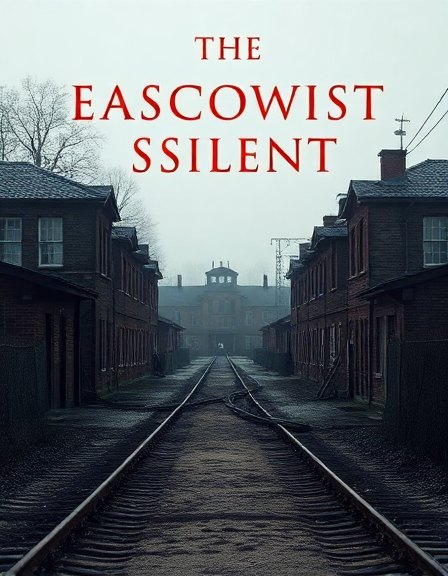
The Echo of Silence
0 reviews
Chapters
6
Language
English - US
Genre
Published
January 15, 2026
Synopsis
Set against the historical reality of Auschwitz, the novel follows the intersecting lives of three individuals whose paths converge within the camp system during the final years of the Second World War. The story centres on **Jakob Adler**, a former schoolteacher deported from occupied Poland, who is assigned to a labour detail responsible for maintaining camp records. His position offers marginal protection, but at the cost of witnessing the machinery of death from uncomfortably close quarters. Jakob struggles with the moral weight of survival—knowing that each day he lives is measured against countless others who do not. Alongside him is **Miriam Lewin**, a young woman separated from her family upon arrival. Forced into a munitions work detail, Miriam survives through quiet defiance: sabotaging equipment in imperceptible ways and preserving fragments of her former self through memory, storytelling, and acts of care toward the weaker prisoners. Her determination challenges the camp’s central aim—to strip its victims not only of life, but of identity. The third perspective belongs to **Karl Weiss**, a junior SS administrator whose role is bureaucratic rather than overtly violent. Through Karl, the novel examines how ordinary men rationalise participation in extraordinary evil. His gradual moral corrosion—and his conscious choice to look away—illustrates how systems like Auschwitz depended as much on compliance and ambition as on cruelty. As the war turns and the camp’s future becomes uncertain, the three characters are forced into moments of irreversible decision. Small acts—passing a name, hiding a child, falsifying a record—carry life-or-death consequences. Not all survive. None emerge unchanged. The novel does not offer redemption in the traditional sense. Instead, it presents Auschwitz as a place designed to erase meaning, and asks where meaning can still be found: in memory, in witness, and in the refusal to forget. Ultimately, the book is a meditation on humanity under systematic dehumanisation—an exploration of how people endure, comply, resist, and remember when placed inside one of history’s most meticulously constructed mechanisms of destruction.
Create Your Own Book
Inspired by what you've read? Turn your ideas into reality with FastRead's AI-powered book creation tool.
Start Writing Now