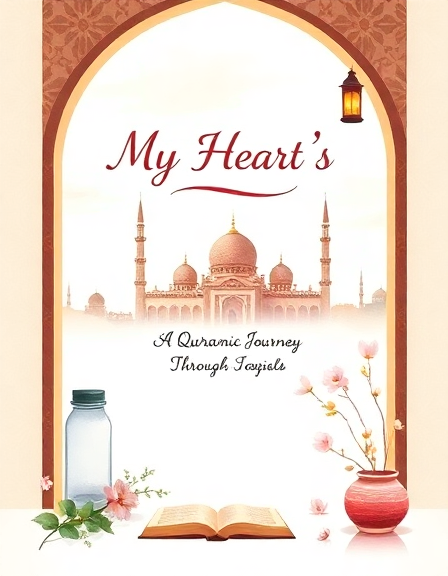
My Heart's Compass: A Qur'anic Journey Through Emotions
0 reviews
Chapters
9
Language
English - US
Genre
Published
October 26, 2026
Synopsis
Design it like a beautifully published book, not a basic worksheet, plain document, presentation, or generic planner. Use a dreamy, elegant, illustrated aesthetic with: * Watercolour illustrations and delicate botanical flowers. * Arched windows, distant mosque silhouettes, lanterns, books, and soft skies. * Warm ivory backgrounds, elegant typography, subtle gold ornaments, and carefully balanced layouts. * Beautiful, readable Arabic typography for Qur’anic verses. * Generous spacing, decorative borders, page numbers, and consistent margins. The design should feel artistic, emotionally warm, sophisticated, and visually rich without becoming cluttered. Every page should look intentionally designed. 3. Opening Pages Create the following pages with complete layouts and coordinated illustrations: 1. Front cover. 2. Title page. 3. A Note to Your Heart. 4. How to Use This Journal. 5. Table of Contents. 6. A beautiful introductory page for each emotional theme. 4. Emotional Themes and Colour Palettes Create 15 sections, each with its own colour palette and matching illustrations while maintaining one consistent book design. 1. Change & New Beginnings — bright, fresh colours. 2. Self-Worth & Dignity — purple. 3. Gratitude & Joy — golden. 4. Hardship & Relief — blue. 5. Anger — orange. 6. Tawakkul — green. 7. Patience & Waiting — earthy brown. 8. Nearness & Feeling Unseen — pink. 9. Feeling Lost & Seeking Guidance — green. 10. Forgiveness & Guilt — warm brown. 11. Hope & Despair — purple. 12. Sadness & Grief — muted, gentle colours. 13. Fear & Uncertainty — light blue. 14. Love — red. 15. Self-Reflection — indigo. 5. Content for Each Theme Each theme should include multiple relevant Qur’anic verses, not just one verse. For each selected verse, provide: * The complete Arabic ayah. * Surah name and accurate ayah reference. * A reliable English translation. * A meaningful explanation grounded in authentic tafsir and the context of the verse. * A relevant name or attribute of Allah, with a reliable explanation of its meaning. * Thought-provoking reflection questions. * A short, original reflection or takeaway. * Sufficient space for the reader to write personal thoughts, lessons, and duas. Verify every verse, reference, translation, and religious explanation. Never invent Qur’anic text, references, or interpretations. Do not make unsupported promises about what Allah will grant or how a particular situation will end. 6. Interior Page Design Create visually varied but cohesive layouts: * Illustrated section-opening pages. * Beautiful Qur’anic verse pages. * Reflection pages with elegant question prompts. * Writing pages with subtle borders and sufficient blank space. * Personal dua pages. * Favourite ayahs and lessons-to-remember pages. * Reusable blank reflection templates. Avoid repeating the same plain layout on every page. Use illustrations and decorative details thoughtfully, without compromising readability or the dignity of Qur’anic text. 7. Final Deliverables Produce: 1. A complete, print-ready A5 PDF. 2. A fully editable Word document with the same content and design as closely as possible. 3. A consistent page-numbering system, contents page, proper print margins, and high-quality typography. Do not provide only a cover, sample page, outline, mockup, or basic template. Create the actual journal, including its opening pages, all 15 sections, complete researched content, and writing pages.
Create Your Own Book
Inspired by what you've read? Turn your ideas into reality with FastRead's AI-powered book creation tool.
Start Writing Now